Part of the money from selling books will go on the development of the blog.
If you are interested in articles on survival, support us!
Showing posts with label Adventures. Show all posts

Monday, July 17, 2017

Why go hitchhiking?


Why go hitchhiking?

Hitchhiking is cool and interesting. Drivers will pick you up only if they themselves want, so in this, if, of course, not to be impudent, there is nothing of paternity. You can travel the world and meet a lot of good and interesting people. In addition, the skills of hitchhiking can be useful to you if, say, in a foreign city you are robbed or you lose money. In this case, you will easily get to the house on the roads. So if you meet a person at the station who asks for money for a ticket, advise him to hitchhike. Of course, in a foreign country, having found yourself in such a situation, it is better to contact the police or embassy and you will get a ticket that you will pay when you get home.

Thursday, July 13, 2017

Top 10 Rules for Hitchhiking


Top 10 Rules for Hitchhiking
About what to say, how to behave and what you should not argue about - you can see in our fresh material.

Hitchhiking is a wonderful thing. If you chose this way of traveling, you, especially if the finances are limited, opens a lot of opportunities to visit in different parts of the world. This is the most interesting kind of travel.

Hitchhiking allows you to better know people. It is unpredictable, somewhat risky and its main plus - the opportunity to break out of the routine routine. Someone thinks that hitchhiking is a state of mind. To help beginners in hitchhiking I collected the main tips.

1. Look decent

The first impression is always important. And from the way you look and position yourself depends, the driver will stop or not. After all, the driver is often hard to understand that they are voting at the roadside, especially at night. Therefore, going on a trip, take care of the appearance.

The girl-hitchhiker should not dress defiantly. Immodest topic and shorts, quite appropriate in the city, on the road can cause anyone not needed associations. It is best to wear comfortable, clean and neat clothes suitable for different weather conditions. In this case, the traveler has a better chance of passing traffic.

In order for you to be noticed on the road, bright clothes must be present on the clothes. If you vote at night, make sure that the clothing is fitted with reflective elements.

Sunday, July 9, 2017

Traveling for adventure. Top 5 places for extreme tourism


Traveling for adventure. Top 5 places for extreme tourism
Adventure tourism is a hobby for very rich and gambling people. Flying on a fighter jet, swimming with whale sharks, fishing in Iceland or New Zealand is not the entire list of extreme entertainments offered to wealthy tourists. We compiled an overview of the most popular destinations for adventure travel.


Safari in East Africa

You can watch National Geographic for years, but nothing compares to the opportunity to see wild animals of Africa with your own eyes. Tourists can watch newborn giraffes hunting lions pride or try foot safaris. The standard tour includes visits to at least three national parks and reserves in Kenya and Tanzania.

Saturday, April 22, 2017

10 tactical tips for survival in the wild


10 tactical tips for survival in the wild

All of us to some extent strive to lead an environmentally conscious way of life. We help the environment, minimizing the use of organic fuels; we buy environmentally friendly products and with the mind approach various household trivialities. To get closer to nature even more, we can go horseback riding or skiing in the forest.

But what if nature had become for you not just a way to relax from the city fuss? What if you suddenly were absolutely cut off from civilization? Would you survive?

Survival in the wild

Even if you are firmly convinced that the essentials - a mobile phone, laptop and iPod, let's be realistic. We all know that without water, food and a roof over your head is indispensable, but are you really ready to survive in a wildlife environment alone?

We prepared a compilation of 10 tips in case you suddenly find yourself closer to nature than you expected.

1. Collection and filtration of water

Collection and filtration of water in nature. The body of the average person is 60% water, and replenishing the body with water is necessary for survival.

Therefore, when there is no shell, no hose, no bottles at hand, find a piece of cloth, hollow log, reed or plastic bag (unfortunately, such bags can now be found almost everywhere) and use it to collect and filter out water.

You can also use the fabric to collect the morning dew from the grass. If you knew in advance that there is a probability of being in such conditions, then, of course, you should take a water bottle with you.

2. Eating

Food in the wild. It so happened that for the maintenance of life we ​​need the energy that we receive from food, so how are you going to eat something in the wild?

Prepare a list of edible wild plants with a detailed description and learn how to grow and transplant the plants that you will meet.

If you know in advance that you will find yourself in such a situation, take with you a sufficient supply of nutritious foods, such as poppy, buckwheat and spirulina powder. Grab and set for germination of seeds in case you have to survive for some time yourself.

3. Oral hygiene products

That's right, you will need a toothbrush. And it's not about caring for a beautiful smile, but about hygiene and health. A toothbrush can be made if you chew the ends of a small twig of a tree to the state of soft bristles. To refresh the breath, you can use needles of coniferous trees.

4. A source of heat and light
For these purposes matches are perfect, because with their help you can light a fire, light a path in the dark, warm yourself, give a smoke signal of distress and burn out parasites, for example, a tick (of course, there are other ways, but anything can happen).

The source of heat and light in the wild

If you do not have matches, use the most banal, all known method of fire mining: find two sticks and rub them against each other.

5. Warm clothes

It may happen that where you happen to be, it will be difficult to keep the heat, but it is necessary for survival. Ideally, you need to have a stock of warm clothing, including thermal underwear and a jacket. If such things are not with you, quickly build a fire and press yourself more persistently towards your companion (if you, of course, were lucky to have it).

6. Knife

Using a knife in a wild environment

If you are one of those who are used to wearing a knife in your pocket everywhere, wherever you go, then you already have a good chance to survive in the wild. The knife is useful for cutting branches and stems for building shelter, making other useful tools, and also for cooking and searching for sources of water (for example, to cut a plant stem and collect juice).

7. Natural remedy for repelling insects

Insects not only get bored and get in the way while you are trying hard to save your life, but also, being carriers of bacterial and parasitic diseases, can significantly reduce your chances of survival. Therefore, it would be superfluous to acquire a natural remedy for repelling insects. Do you know that ordinary lemon juice is suitable for this?

8. Material for the construction of shelter

How to build a shelter in the wild

Rain, sun, snow, hail, wind, insects, and maybe even wolves and bears ... No doubt, to protect yourself from many unfavorable environmental factors, you will definitely need a shelter. There are a number of ways to build it out of natural materials, and the choice will depend on your needs and the conditions in which you ended up.

9. Natural First-aid Kit

If you are in the wild alone and injured, you will be more vulnerable to infections and diseases. Learn how to find everything you need in a wild environment and collect a natural first-aid kit.

10. Compass

Using a compass in the forest

Who knows ... Perhaps you will like to live away from civilization that you will not want to return. Otherwise it would be useful to have an instrument with you that will help you better navigate the terrain while traveling.


We are able to survive in the wild, because we ourselves are part of it: but still have to prepare a little.

Monday, April 17, 2017

10 cities that serve the world’s best street food

10 cities that serve the world’s best street food

Ask any avid travellers and they will tell you that the best way to discover a city’s food scene is by venturing to the food streets. Local, authentic and prepared right before you – it couldn’t get more exciting. CNN has named top 23 cities in the world for street food and here are the top 10:

1. Bangkok, Thailand


PHOTO: Reuters

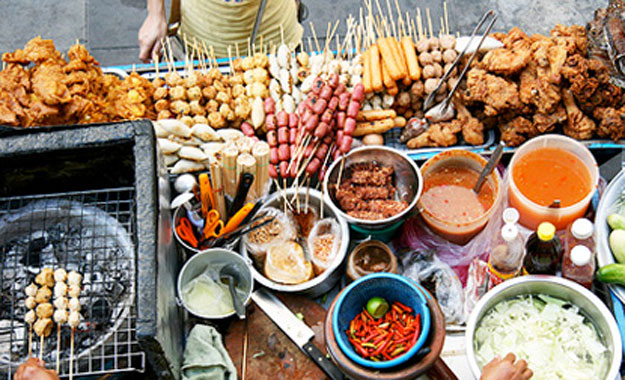
When you think street food, Bangkok is probably the first city that comes to mind. The city is noteworthy for both its assortment of offerings and the abundance of street hawkers.

From sweet soymilk and bean curd for breakfast to aromatic rice and poached chicken for lunch the food streets have something to appeal to any and every foodie. Phad Thai noodles and grilled satay seem to be late night favourites.

2. Tokyo, Japan


PHOTO: Reuters

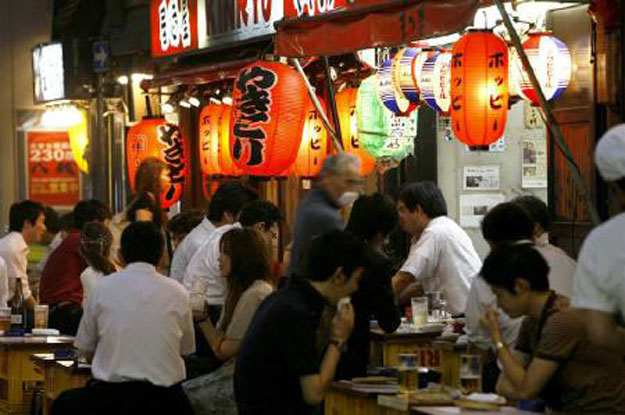
After acquiring 10 additional Michelin stars in 2016, Tokyo has more Michelin-starred restaurants than any other city in the world. However, you don’t have to visit a Michelin starred restaurant to experience good food in Tokyo, the food streets in the city offer equally delicious food.

3. Honolulu, Hawaii

Poke, the fish salad that seems to be trending right now, is very commonly available in Hawaii according to CNN. The city also has a “thriving food truck scene”, however, CNN recommends travelling to the North Shore’s Kamehameha Highway in Haleiwa for some genuine culinary discoveries.

4. Durban, South Africa


PHOTO: Reuters

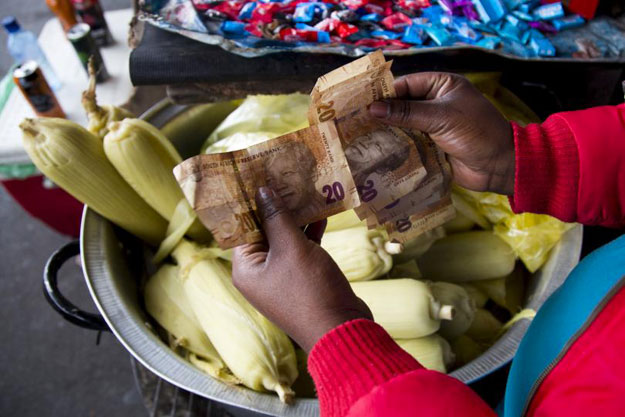
The go-to place for street food fans in South Africa, Durban’s cuisine is influenced by Zulu, Indian and white South Africans. The city is popular for its curries, which has adapted to South African ingredients and palates.

5. New Orleans, Louisiana

From hot dogs to fried alligator, New Orleans’ cuisine is quite versatile and street food is where you will find the favourites.

6. Istanbul, Turkey


PHOTO: Reuters

There is more on offer on Turkish food streets than the omnipresent Doner. One of the most renowned items would be simit, which resembles a bagel. However, there much more to discover –from musssels to Lahmajun (Turkish pizza) and pistachio flavoured ice-cream.

7. Hong Kong

Taking to food streets on weekends is the preferred activity on weekends in Hong Kong. It is also the city where Michelin decided to launch its first-ever street food guide. Shau Kei Wan Main Street East and Kowloon City are two popular weekend destinations that serve the city’s best sweet tofu custard and Cantonese egg waffle. There is a lot more to explore.


8. Paris, France


PHOTO: Reuters

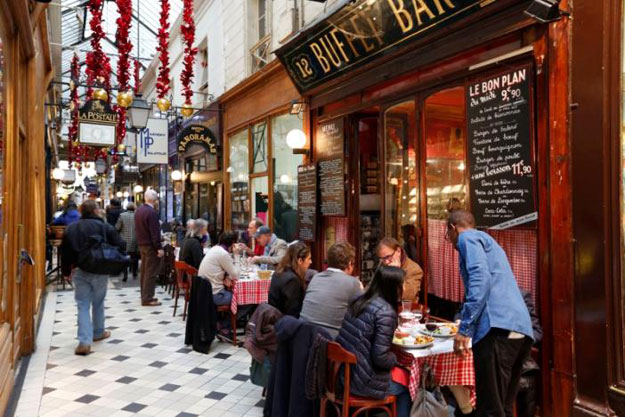
While Paris is known for its fine-dining restaurants the city’s street food is also worth discovering. Fresh pastries, crepes with gruyere and roasted chestnuts are all well worth the street visit.

9. Mexico City, Mexico


PHOTO: Reuters

There’s more to Mexican street food than tacos and a visit to Mexico City will prove so. Their use of native ingredients and methods for enhancing flavours is not possible to experience anywhere else.


10. Cairo, Egypt


PHOTO: Reuters

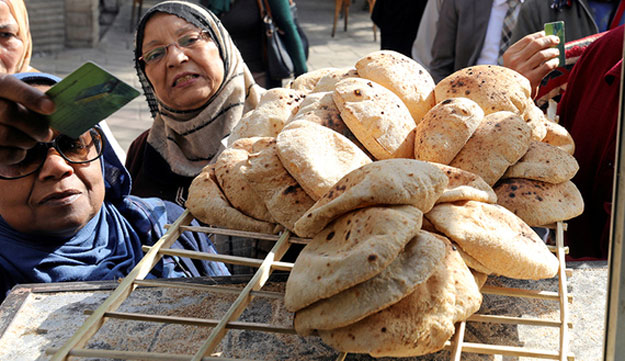
While falafel, shawarma and kofta have fans everywhere in the world. There is more to Egyptian cuisine that has been explored such as Koshary which mixes rice, pasta, lentils and chickpeas, topped with a vinegar-based tomato sauce.

Sunday, April 2, 2017

10 rules of how to properly prepare and pack a backpack for trekking


10 rules of how to properly prepare and pack a backpack for trekking

To assemble a backpack in a hike is a whole science, which can only be known with experience. It is important not to forget anything important, not to put too much. It is equally important to pack all carefully selected equipment in a backpack in such a way that you do not have to disassemble all the contents at the nearest halt in search of, for example, a knife. Besides, on how correctly you will pack a backpack, your perception of its weight will depend.
I asked my friend John Gimson Jr. - an experienced tourist who passed with a backpack behind his back about 7000 miles, to give some advice on picking up a backpack on a hike.


1. Start to gather in a few days

Write a list of things; fasten it in the corner, where you will put the equipment, gradually removing it from the list. During these days you will understand what you really need, what you can not take, and what is missing and you should buy. Slow fees also reduce the chances of forgetting a thing, and passing glances at a bunch of gears raise your spirits. Then, when you have already accumulated experience, the fees will pass faster, but from the list of things still do not refuse!


2. Choose the appropriate backpack

Proceeding from the things left in the corner; choose a backpack of the required volume. I do not like that something hang outside and I prefer that everything fit inside the backpack. Outboard equipment must necessarily cling to trees, bushes or rocks. I'm not talking about clattering kettles and pans, which some people like to hang outside.
If you fasten things outside the backpack under the screeds, duplicate their fastening with small carabiners, or laces. Often things are forgotten during halts: you need to get something out of the backpack and you unfasten the straps, then fasten them back and just forget that you have something fixed.
Of course, foam is difficult to fit inside the backpack, so, more often; it is attached from the outside. I refused the pens because of their cumbersomeness, and I go camping with Term-A-Rest pneuma mats: they are softer on them and they take up less space.


3. Properly distribute things

The basic principle is to place the heavy equipment closer to the back, from the waist up to the level of the shoulder blades. If you pack heavy equipment from below, the backpack will pull you to the ground. Having placed heavy things above the shoulder blades, you will feel like a pendulum.
It is also important to observe the balance of things on the sides of the backpack. If something heavy was put on the right, then put the counterweight to the left. The backpack should not be outweighed on one side.


4. We pack the sleeping bag

Do not fully tighten the straps on the compression bags - you will have a ball, in a backpack, it creates around itself a lot of space that is difficult to fill with anything. The loose bag lies flat and "envelops" other equipment, fixing it during the transitions and useful filling the volume.
Try generally to refuse compression for a sleeping bag (or tent), of course, based on the situation, and you will see how cool it is distributed over the free cavities of the stuffed backpack.


5. Use special bags for things

So you can quickly find the necessary equipment, and there will not be a mess in the backpack. For example, for clothes I use a compression bag, and the clothes are also distributed to me in small bags: a spare set of thermal underwear in a separate zip-lock, socks in another.
Zip-Loks are good because they can be squeezed together with things, leaving a small hole, and, having got rid of excess air, close. So they will take less volume.
Sacks for equipment come in different colors and sizes, from durable Cordura material or lightweight from the mesh. So you can even better distribute your things and do not waste time searching for them. And yes, please do not take rustling t-shirts, do not disgrace your fellow travelers with an eternal rustle, especially in the morning.


6. Distribute meals by day

Distribute meals by day - it's much more convenient than dumping, pasta and other food in one package, and then gets it every time, measuring the right amount for dinner.
Packages with food can be pulled off food film to save space, put deeper into the backpack and forget about them, only in the evenings getting 1 package the next day. It can be placed where it is easy to reach during the day, preferably closer to a burner or a bowler.


7. Collecting things in the upper valve

At the top of the backpack there is usually a convenient large pocket for things that you will certainly need during a day trip: a windbreaker, a rain poncho, a cap, toilet paper. Use it for such things; do not put the necessary things that you may need during the day, deep into the back of the rucksack.


8. Do not hide the camera in your backpack.

If you think that in beautiful places you will stop and get it to photograph - you are mistaken. Carry the camera at hand, for example a soap box can be put in the pocket on the femur strap.
It is convenient to carry a large camera in a triangular case by fastening it in front of the shoulder straps.


9. Protection against rain

Depending on the weather, think about the case from the rain. It can be a classic cape for a backpack or a more complete option - a poncho. So the water will not seep between the backpack and back.
Sleeping bag or clothes I would still advise to put in waterproof bags or hermetic bags. They, by the way, come with windows, which simplifies the search for the right thing. Provide also hermetic covers for your electronics, documents and maps.

10. Setting the backpack

Correctly adjust the suspension of the backpack for growth, if possible. There should be no space between the shoulder and the straps, and the thigh strap should fit tightly around you. Remember that most of the weight should be on the femoral belt, and not on the shoulders.
Tighten all the side straps; fill all the dangling ends of the ties and straps: they will not hang out in the wind and irritate you with their clapping. One day, the dangling end of the strap over my shoulder flew into my eye with force. Sensations are very unpleasant, I tell you.


Bonus


Wear a backpack slowly and without jerks - take care of your shoulder ligaments, as well as the seams of your backpack from ruptures!

Monday, March 27, 2017

The basic rules of survival in the hike


The basic rules of survival in the hike

- When going to nature, be sure to bring along a map, compass, communication equipment (mobile or cell phone and spare charged batteries to them).

- Inform about your route to relatives and friends. If possible, register with the local search and rescue team. Determine the key date of return. Agree on the frequency of communication sessions.

- Each member of the group should have matches with waterproof packing, a lighter, a knife, a minimum set of products.

- Moving on the terrain, mark on the map visible landmarks that will help you find your way back.

- If you are still lost, and you do not have a map or a compass, if possible, climb the highest tree and look around the neighborhood, then go to the highway, the railway, the river or the power lines - they will lead to the village.

- If possible, contact the rescue team. While waiting for rescuers, go to an open area (glade, river bank, etc.) Lay out on the ground and hang on the bright objects. This will help rescuers, if the search will be conducted from the air.

- In addition, before you go on a hike, make sure that you have learned the route well and you know the pathways along which your route will pass. Take an interest in the conditions of the terrain and the weather forecast. Be sure to bring your travel cards with you. To obtain reliable information, contact the local authorities.

- Make sure that your equipment meets the requirements of your trip. Bring a sufficient supply of food and beverages, necessary clothing, in particular, thermal underwear.

- Avoid hiking alone. The group that goes on a trip must consist of at least three people. If suddenly an accident happens to someone, one of the participants of the campaign will remain with the victim, and another will go for help.

- Be sure to inform your relatives and friends about the passage of your route and the expected time of your return from the trek.

- During the hike, try to follow the path and do not descend from it. Then you will never get lost.
- Before arranging a camp, be sure to familiarize yourself with the local rules for breeding open fire. In many places, open fire is prohibited by local regulations.

- Try not to disturb the environment with loud cries and music.

- Constantly take care of the environment. Try not to harm the flora and fauna. Be sure to take all your waste with you. And in the event that you find other people's waste, then manifest your culture and take them with you. Organic materials, although easily decomposed, must be buried or taken away with them. It is not necessary that animals eat this waste.
If you use detergents, then try to do this procedure at a distance of not more than a hundred meters from the water source.

- To go to the toilet is desirable at a considerable distance from the route and possible sources of water. For this purpose, it will be best if you dig out a small pit, which you then need to fall asleep. Use any fuel to burn used toilet paper.

- If you took a dog with you, do not forget to learn about the local rules of keeping animals. Try to keep it all the time on a leash. Local rules sometimes require this.

- Read local laws regarding fishing and hunting. In most cases, these activities need to have permission from local authorities.

- If you found damaged signs on the route, be sure to write down their exact location and inform the relevant authorities. The absence of such signs can create difficulties for other tourist groups.


- First aid. An integral part of the tourist equipment during the hike is the availability of a first aid kit. The first aid kit should include a set of tools and medicines for emergency care. This will include gauze compresses, bandages, antibiotic cream. Also included are various hand sanitizers, pain relievers and individual medications. The contents of the first aid kit should correspond to the peculiarities of weather conditions, terrain and various features of the region where your route will take place.

Thursday, March 23, 2017

The most luxurious cave in the world


The most luxurious cave in the world

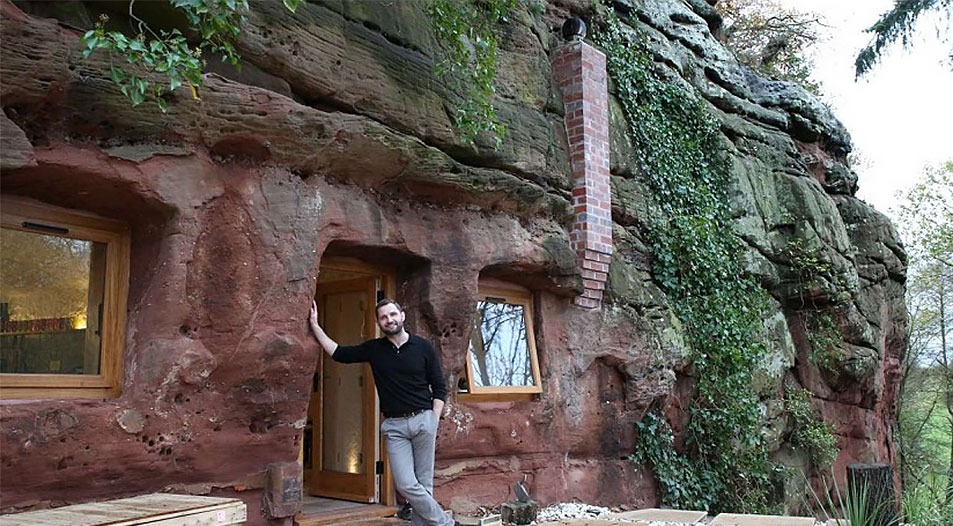
Angelo Mastropietro is a modern caveman. But this does not mean that he is far from civilization or his home is deprived of comfort. In fact, it's quite the opposite. Cave Angelo - a real "dream house", a luxurious refuge from the city noise and bustle.


This house - the first in Britain, a truly inhabited cave of the 21st century. There are some village charms here, like a stove heated with firewood, but there is also a modern electric stove and other amenities of modern civilization that belong to the modern dwelling.

Wednesday, March 22, 2017

How to choose a backpack


Backpack selection

When choosing a backpack, you should pay attention to the following features:

Materials

Firms-manufacturers use modern materials: various synthetic fabrics, light and strong, waterproof and not frozen. The Cordura fabric is very popular. For a suspended system, it is better to choose fabrics with membrane technologies - to remove moisture and heat from the body. Numerous lines and cords of backpacks are also chosen to be synthetic; they are capable of withstanding heavy loads.

The form

The higher the center of gravity of the backpack and the closer it is to the person's back, the easier it is to carry the load. On the other hand, the backpack should not be much wider than the shoulders - it will cling to everything in the forest during active movement, not every door can be walked through. Therefore, the choice of a backpack is mainly high and narrow. The possibility of "growth" in breadth remains in the form of attaching additional cargo to the side.

The volume of backpacks is measured in liters. However, everything is not so simple! Measure these liters in different ways. Someone thinks the total volume of the backpack is the volume of pockets, somebody does not. Therefore, if it is written on the backpack that its volume is 60 liters, it does not mean anything.

Backpacks of medium (50-60 liters) and large (over 60) volumes are often made with the separation of the main container into two parts. According to some, the convenience of dividing into two compartments is completely compensated by a decrease in strength - any element complicating the product reduces reliability. On the other hand, it is very convenient not to disassemble the entire bag in order to get a warm hat or mittens from the bottom of the backpack. In this situation, the choice is yours.

Suspension system

Straps must meet the basic requirement - to be comfortable. It is in the design of straps that 80% of the convenience of carrying a backpack with active loads is laid.

First of all, when choosing a strap, they should be sewn on the figure, or it should be possible to adjust them. This applies to the height of the attachment point, and the distance between the straps. Too widely spaced straps will fall off your shoulders.

The form of the straps is crescent shaped, or S-shaped. The choice of straight straps is less convenient, they inevitably crumble, following the form of the shoulders. In places where the person is in contact with the body, the straps should be soft.

The choice of width of the straps is about 2-3 in on the average. This is enough for comfortable carrying even very heavy loads; wider straps fall off the shoulders or, conversely, crash into the neck.

Buckles adjusting the length of the straps should be tightened downwards so that you can adjust the straps by already wearing a backpack. When choosing a backpack, bear in mind that the buckles on the straps must withstand heavy loads.

The design of the straps assumes the presence of a puller running from the top of the shoulder to the top of the main capacity of the backpack. These are belts that do not allow the backpack to recline from the back. The position of the straps and the sewing point of these belts should be so aligned that the belts, as it were, continue up the line of straps from the shoulders, starting at the collarbone area.

Belt strap allows you to transfer some of the active loads from the shoulders to the lower back, to the hips. This is justified by human anatomy. But it is important that the belt sat on the hips.

Belt straps are sewn and removable. Preferably choose removable. The width of the waist belt is not less than 4 in, preferably anatomical shape, and fitting hip. Inside the belt device is similar to the design of straps.

Valve

The valve on the top of the backpack is more common in models larger than 40 liters. It not only closes the top of the bag from rain or snow, but also is an extra capacity, allows you to put in it essentials so that they are always at hand.

By its design, the valves are sewn and "floating". At "floating" it is possible to adjust an arrangement on a backpack depending on its height. It is possible and generally to unfasten the valve and use it separately as a waist bag or a small backpack (if provided by the design of the valve).

Screws

Screeds are needed to adjust the volume of the backpack. Ideally, screeds should form a closed belt "frame" around the backpack, and the entire load should fall on the belts. A better option is if the sling is sewn through an additional triangle of dense fabric that distributes the load over a large area.

In addition to the side and vertical screeds, an additional strap is also placed, allowing the main volume to be tightened from above, but under the valve. This is very convenient, if you push into a stuffed backpack any soft thing. The choice of model with an additional line allows you to compress the volume under the valve.

Pockets

When choosing on pockets, you should also pay attention because they are convenient for storing small items. It is important to have the pockets on the backpack, because the location of the pockets at the bottom of the backpack is not always practical. During the stops you have to put the backpack not always on a clean surface with pockets down. Zippers on pockets will quickly fail if they are located in places of active load of the backpack. Many manufacturers refuse from pockets, limiting the valve.

Hitch

Expedition and assault backpacks have a number of traditional places for securing external cargo. First, there are belts for cats on top of the valve. A rope, a tent, a narrow rug can be attached from below-behind the backpack, under the bottom, for which there are also sewn belts with buckles. If the backpack does not have back pockets, then it is convenient to mount the mat backwards vertically along the backpack. To carry the ice ax at the junction of the back wall with the bottom, the loops are sewn from the slings, behind them the ice tool is started with the beak down, and the handle is fixed with a velcro strap or buckle.


There are different semi-rings and carbines for fixing items on the strap - from the mittens to the knife and flask.

Tuesday, March 21, 2017

10 Tips for Unforgettable Travels

The tourist tries to fill every day with adventures and hopes that by his example he will give motivation and inspiration to other travelers.


10 Tips for Unforgettable Travels

Always remember where your passport and credit cards lie. These are the two most important things during any trip.

Keep a spare credit card separate from the main one. If there is one card in the wallet, leave the second in the hotel room. In case of theft or loss of a purse, you will not be left without money.

Be sure to issue insurance. Traveling around the world without insurance is risky and stupid. Of course, we all think that "this will not happen to me exactly," but life is unpredictable.

Do all the necessary vaccinations. Before traveling to a number of countries, it is necessary to make some new vaccinations and check the effect of those that were made earlier.
Taking care of health is the most important aspect of any journey, because nobody wants to catch a fever or other illness.

Eliminate the need to pay a baggage allowance. Pack in a small and comfortable backpack.
Instead of restaurants, go to local grocery stores. This is cheaper and an interesting experience.


Hostels are an excellent source of information. Even if you are not going to spend the night there, go to one of the hostels and ask administrators or visitors about the city in which you came.

Monday, March 20, 2017

Top 10 best adventures in 2017


Top 10 best adventures in 2017

A single cell in a Bolivian prison

Prisoners of San Pedro colony in Bolivia conduct paid tours of prison blocks. For an additional $ 100, you can get a personal camera for one night, with or without a woman - at will. Money tourists go to improve the buildings and areas of the prison, and convict guides receive early release. San Pedro is literally a colony, an independent city within the city. Prisoners are allowed to live with their wives and children - the conditions here are better than those outside the walls. In prison there is an internal market where for money you can get any sensual joy. Some prisoners start a successful start-up workshop to repair clothes, a kiosk with street food or a self-made casino. The enterprising and corrupt chief of the prison has an exclusive contract with the Coca-Cola Company: soda competitors - a little that is strictly prohibited in the prison.

Salvation from an uninhabited island

The English travel agency proposes to spend ten days on a desert island in the Caribbean Sea. Participants of the expedition are taught the skills of survival in the wild - instructors show how to desalinate salt water, build a bonfire without matches, and get food on land and at sea and build shelter from the wreckage of the aircraft. After a week of training, a rescue helicopter is sent for the group. Here begins the second part of the adventure - a helicopter crashes in the open sea. All the instructors in the scenario die, and then the group has to survive on its own. With a minimal set of tools, the Robinsons must master the new island, equip the camp, and at the end of the adventure build a life raft and swim away on it home.

Illegal entry into the US

In the Mexican city of El Alberto for $ 20 offer to spend wishing through the American border - under the barking of dogs, shots of border officers and howling sirens. Of course, this is a reconstruction - the arms of the border guards are not loaded, the dogs do not bite. But the sensations of the chase promise the most real. First, a group of imaginary illegal immigrants are taken to a pickup truck in a rain forest. From here it's easiest to get to the US - trees, lianas and thorn bushes will be the ideal hideout for fugitives. The group is led by an experienced instructor; they are called "coyotes" here. Coyote commands when to lie down on the ground, and when - to run from all directions. Immigrants often have to look under their feet - prickles of cacti, snakes and spiders play on the side of the border guards. La Caminata (Night Walk) has become a city-forming business for El Alberto. Once destroyed village, now turned into a thriving town, where every week there are up to hundreds of tourists.

The pursuit of the hurricane

A team of tornado divers invites in pursuit of a hurricane. From the beginning of spring to the beginning of autumn, professional meteorologists pursue tornadoes throughout the US - from Texas to Dakota. In one season they observe and study about 30 hurricanes. Tourists are greeted in one of the cities of the Tornado Alley - here the greatest chance of catching a hurricane. A group of experts and amateurs pursue tornadoes on heavy minibuses that resemble cars from the movie "Mad Max". Vans are sewn into heavy armor and are loaded with the latest satellite equipment. If the group is lucky to find a tornado, the technique will allow approaching the funnel for a minimum distance - to study the tornado and make the most hardcore Instagram-snapshot in life. On cloudless days, tourists are shown atypical attractions, for example, the largest US meteorological center in Oklahoma or a steakhouse with the most generous portions in Texas.

Wild football derby

Traveling to Latin America is quite adventurous in and of itself, but if you want real passions, buy a ticket to the Superclassico match. This is a derby between the main football clubs of Buenos Aires and all of Argentina - "Boca Juniors" and "River Plate". Even more than in football, both teams have succeeded in disciplinary punishment - their fans are considered the most outrageous in the world. You can imagine what the charge of rage is released when both clubs meet on the football field. With the Superclassico match is linked the biggest tragedy in the history of football, when after a mass brawl in the stands of the stadium 71 people were killed and 150 more were injured. Another intrigue is that the fan company "Boca Juniors" consists of working-class children and Italian immigrants, and "River Plate" is the title team of manufacturers and boys-majors.

Deadly fishing

In Alaska, you can join the "Deadliest Catch" TV show for money. Crab catching in the Bering Sea is on the list of the most dangerous male professions. These waters are considered the most difficult for navigation - for most of the year strong winds are blowing here, the sea is never calm, and the deck and masts of ships are covered with ice crust. The work of the fisherman turns into a survival school - iron cages with crabs constantly fly overhead, the deck is literally covered with claws and beaks that grab and bite at the feet, waves threaten to wash overboard.

For those who are not ready to stay at sea for several months with a side effect in the form of head injury, there is a soft alternative. Several times a month, one of the ships of the Flotilla of the "Deadly Catch" arranges commercial three-hour raids. This time just enough to get used to the role of catcher, overcome a few trifling dangers and, feeling like a real man, return to shore. Most likely, forever.

Leap into the crater of a volcano

Bungee jumping is the destiny of seniors and housewives, but this gum is 100% worth being on the list. In Chile, you can jump on bungee in the mouth of a burning volcano - specifically for the attraction rent a helicopter, which hangs 200 meters above the crater. The lower jump point is a few dozen meters above the boiling lava, so the new haircut is included in the cost. When you look into the eyes of the fire-breathing snake, the helicopter will carry you to the take-off platform at the end of the barge. Eyewitnesses say that over the treetops one of the most picturesque species on the planet opens. The jump in the vent of the volcano was invented specially for the reality show "Fear Factor" on MTV, but according to numerous requests it was de-virtualized and included in the tourist program, accessible to all comers.

Private zombie apocalypse

If you love zombie movies, you probably know that survivors sometimes escape on the island, in England. In real life it was the British who came up with the combat attraction "War with the zombies." For several hours you can be in the epicenter of a biological catastrophe. The action of the apocalypse takes place in an abandoned manor house near Manchester. Under the scenario, a group of participants are thrown into the infection zone, which must be cleared of monsters. The recruits are armed with replicas of combat rifles, pistols and machine guns. The weapon shoots air, but this does not become less threatening. It is interesting that you can fight for both sides - the zombie team also consists of non-professionals. If you choose the dark side, they make you look like a zombie, teach you how to clap your foot, wheeze and throw yourself realistically at people. Despite the apparent innocence of the struggle, many participants are seriously injured. Apparently, the fear of a zombie deeply devoured all the brains.

On the wreckage of the earthquake

Apparently, as a sign of protest against the image of prim boring Englishmen come up with one desperate adventure after another. Adrenaline travel agency Disaster Tourism offers a trip to the epicenter of a natural disaster. For example, you can visit the site of a recent earthquake, tsunami or volcanic eruption. Sadly, the program of tours is updated every day - as soon as a natural disaster occurs, it is added to the list. Here you can book an individual tour - if you dream to visit the crash site or visit the war zone, leave a request on the site, and Disaster Tourism will arrange for you a suitable trip.

Rafting on a mountain river


Against the background of other adventures, this is an almost romantic journey on a makeshift raft on a mountain river. In Sweden, the tradition of forest fusion is still preserved, when the cut down trees are tied into rafts and driven along the river to the sawmill. For 150-300 pounds, you can pretend to be Huckleberry Finn and build your own raft. The journey begins in the camp of real loggers, who have never heard of village council in their lives. They show tourists how to properly tie a raft, so that it does not pass water and does not break on the road. Following their advice, newcomers build a raft on their own, which will be their home for the next week. Next, instructors are taught to rule the raft, bypassing the shallows, rapids and cutting off the low branches of trees. After all the master classes, a six-day rafting begins - with night fishing, stories by the fire and fairy-tale views. At the end of the journey, the raft is unleashed and allowed to Swedish furniture and souvenirs for tourists.

Sunday, March 19, 2017

10 rules of true adventure


10 rules of true adventure

1. This adventure is sudden. Just yesterday morning you quietly smoked a pipe on the porch, and now in the company of thirteen strange strange faces and an old wizard, you go on a trip to the dragon.

2. This adventure lasts. Well, what kind of adventure, if in a couple of hours you return home?

3. This adventure is dangerous. It does not matter, you risk breaking your leg or forever losing your mental balance - the main thing is that the danger is close and non-illusory.

4. This adventure requires going beyond the "comfort zone". What you are able to do easily and mundane is not an adventure (there is someone who goes to this unfortunate dragon once a month-his job is this).

5. This adventure does not happen alone. What kind of adventure is this, if you are alone and there is no one to exchange enthusiastic "We are the end, but how interesting!"

6. This adventure introduces you to new people. Yes, some of them will try to kill you, but this is also a way of meeting people.

7. This adventure leaves traces and trophies. And a thousand ways to tire out a grateful listener.  How, I have not yet told, where do I have a scar on the ass saber, which hangs over the fireplace ?!

8. This adventure requires traveling. Well, or at least in the sewer hatch to fall, you need to start.

9. This adventure makes you choose. And now you are standing at the stone ...

10. And yes, this adventure changes you irrevocably. Instead of you, someone else will return.